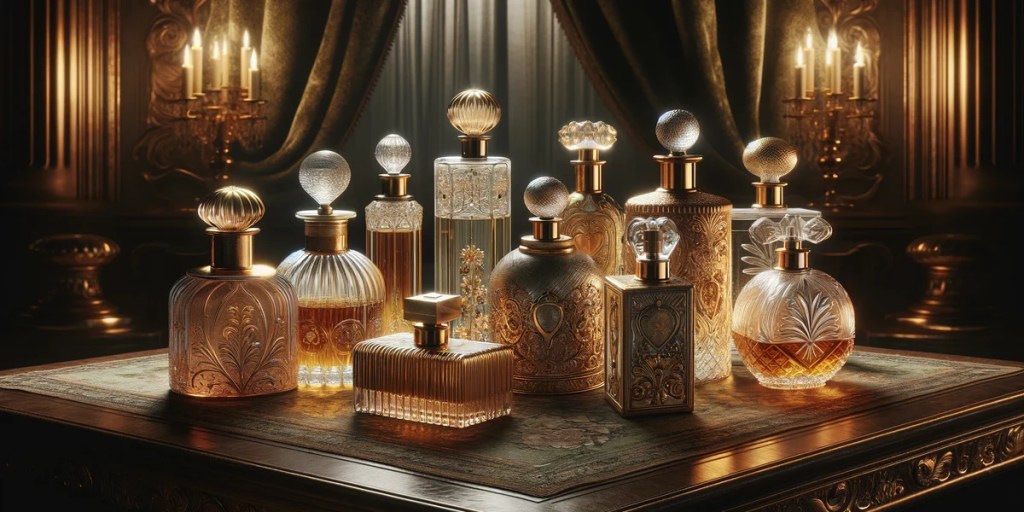
There’s a unique kind of magic that happens when you hold a vintage perfume bottle. It’s not just the weight of the glass or the satisfying click of a ground-glass stopper. It’s the silent promise it holds. This little vessel isn’t just a container of scented liquid; it’s a time capsule. One spray, and you’re not just wearing a fragrance—you’re wearing a memory, a moment in history, a piece of art from a bygone era.
We live in a world of endless new perfume releases, each vying for our attention with flashy campaigns and celebrity faces. Yet, a growing number of us are turning our noses to the past. We’re scouring flea markets, diving into the depths of eBay, and trading whispers in online forums, all in pursuit of these fragrant ghosts. But why? What is it about vintage perfume that holds such an irresistible allure?
It’s more than just nostalgia. It’s a journey into a different world of scent.
Uncorking the Past: A Journey into Vintage Perfumery
First, let’s clear the air. “Vintage” isn’t just a synonym for “old.” In the perfume world, it typically refers to fragrances in their original, pre-reformulation state. The dividing line is often drawn around the early 2000s, when the International Fragrance Association (IFRA) began heavily restricting or banning many of the traditional ingredients that were the very backbone of classic perfumery.
Think of it like this: a modern chef can create a beautiful rendition of a classic dish, but if they’re not allowed to use butter, full-fat cream, or salt in the same way the original recipe demanded, the result will be fundamentally different. It might still be delicious, but it won’t have the same soul-satisfying richness.
Vintage perfumery is the full-fat, original recipe. It’s perfume made with a palette of ingredients that are now considered too allergenic, too unsustainable, or simply too expensive for mass production.
The Ghosts in the Bottle: Forbidden Fruits and Lost Chords
The primary reason vintage perfumes smell so different—and, many argue, so much better—is the ingredients.
Take oakmoss, for example. This lichen, with its deep, earthy, and slightly bitter aroma, was the cornerstone of the entire chypre fragrance family. It provided a three-dimensional, forest-floor depth that made fragrances like the original Guerlain Mitsouko or Chanel Pour Monsieur feel endlessly complex and melancholic. Today, real oakmoss is heavily restricted due to its potential to cause skin sensitization. Modern replacements try their best, but they often lack the shadowy, velvety texture of the real thing.
Then there are the animalics. Ingredients like civet (from the civet cat), castoreum (from beavers), and real musk (from the musk deer) are now banned for ethical reasons. While we can all agree this is a positive step, there’s no denying they contributed a specific magic. These weren’t just “stinky” notes; they were fixatives that gave perfumes incredible longevity and a warm, skin-like, almost human purr. The original formulation of Chanel No. 5 Parfum had a touch of civet that gave its clean, aldehydic sparkle a subversive, animalic warmth. The legendary Guerlain Shalimar in its vintage form is a masterclass in controlled chaos, where the smoky vanilla and leather are made impossibly sensual by a growl of civet and castoreum. The modern versions are beautiful, but they are undeniably politer.
Even florals were different. The original Dior Diorissimo by Edmond Roudnitska was a stunningly lifelike lily-of-the-valley, an olfactory hologram achieved with a masterful blend that included a now-restricted molecule called hydroxycitronellal. The current version is lovely, but it doesn’t quite capture that same dewy, breathtaking realism.
The Thrill of the Hunt: How to Start Your Collection
Dipping your toes into the world of vintage perfume is an adventure. It’s a treasure hunt where the prize is a bottle of liquid history. Here are a few tips to get you started:
1. Know Where to Look:
- Estate Sales and Flea Markets: These are the holy grail. You can often find pristine, boxed fragrances that have been sitting in a drawer for 50 years, sold for a song. Look for dark, cool closets and vanity tables.
- Antique Shops: Often a bit pricier, but you can find some real gems. Shop owners may or may not know the value of what they have.
- Online Sellers: eBay and Etsy are the biggest players. The key is to buy from reputable sellers with high ratings and clear photos. Look for sellers who specialize in fragrances and can answer questions about storage and provenance.
2. Learn the Telltale Signs:
- The Box: Look for older designs, different fonts, and sometimes, a “Made in France” that looks different from modern packaging. The iconic black-and-white houndstooth pattern on an old box of Dior is a great sign.
- The Bottle: Splash bottles are often older than atomizers. Look for ground glass stoppers, especially on parfum or extrait concentrations. Guerlain’s iconic bouchon coeur (heart-shaped stopper) and flacon montre (watch-shaped bottle) are dead giveaways of a certain era.
- The Juice: Don’t be afraid of the dark! Perfume, especially with vanilla, naturally darkens over time to a deep amber or even cognac color. This is normal and a good sign. Be wary of cloudy liquid or sediment, but a little darkening is to be expected.
A Word of Caution: Patience is a Virtue
When you first spray a vintage perfume, you may be underwhelmed or even put off. The most volatile molecules—the bright, citrusy top notes—are often the first to degrade over the decades. What you might smell for the first 30 seconds is a blast of faded alcohol or sharp, “off” notes.
Don’t panic. This is normal.
Wait. Let the fragrance settle on your skin. Give it ten, twenty, even thirty minutes. This is when the magic happens. The damaged top notes burn off, and the glorious, well-preserved heart and base notes emerge. This is where you’ll find the rich florals, the deep mosses, the warm resins, and the animalic purr that you’ve been searching for.
Collecting vintage perfumes is not just a hobby; it’s an act of preservation. It’s a way to experience perfumery as the grand, audacious art form it once was, free from the constraints of modern regulations. Each bottle tells a story—of the person who wore it, the era it was born in, and the master perfumer who composed it. It’s a whisper from the past, waiting for you to lean in and listen.

 Harlen
Leave a comment